top of page
HOW IT STARTED
Year:
2012 - 2019
Title:
VISUALIZING SOUND
A study on the ways we perceive and shape sound and movement. The methodology is structured around three interrelated conceptual axes: embodiment, the kinetic origin of sound, and temporality as spatial experience. Artistic practice functions as an experiential field where collective movement and music-making expand self-awareness while cultivating relational intelligence, coordination and group synchronisation.

01
Grounded in the understanding that sound is produced through vibration and motion, the practice develops a performative vocabulary in which movement generates perceivable sonic structures, enabling cross-sensory communication accessible to participants with diverse sensory abilities without dependence on translation systems.

02
Time is approached not as an abstract measurement but as a spatial unfolding of actions, drawing parallels with visual-kinetic languages such as sign language. Through organised bodily rhythm, music acquires visual and tactile dimensions, allowing deaf, hard-of-hearing, blind, and sighted participants to co-create shared aesthetic experiences within an inclusive sensory framework.

03
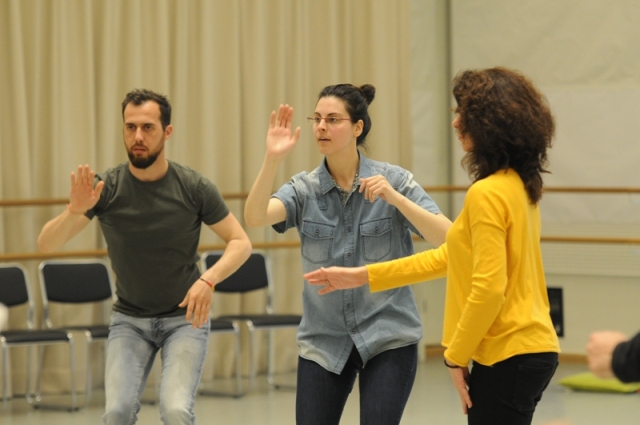
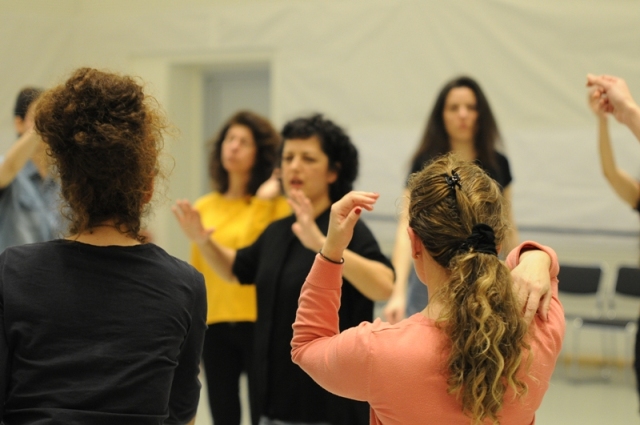
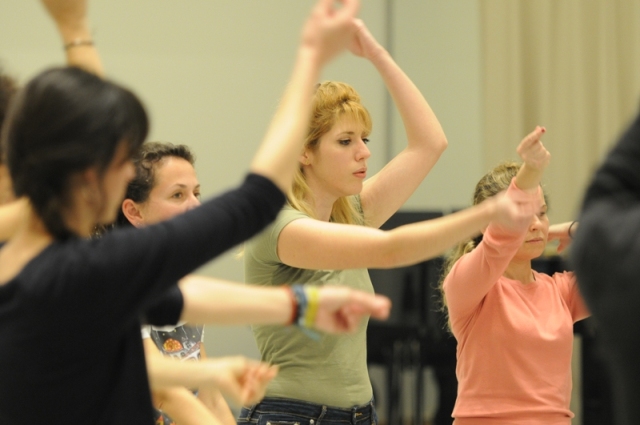
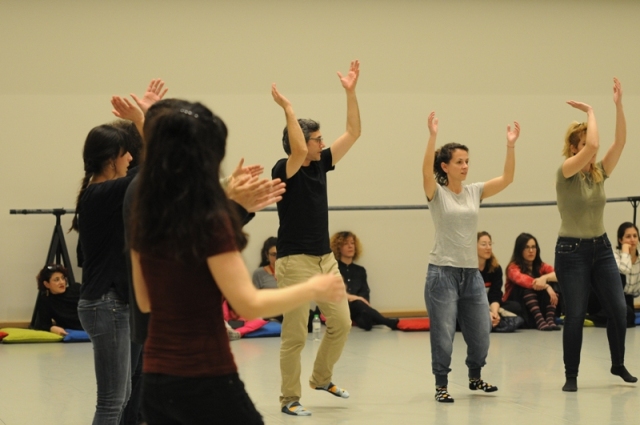
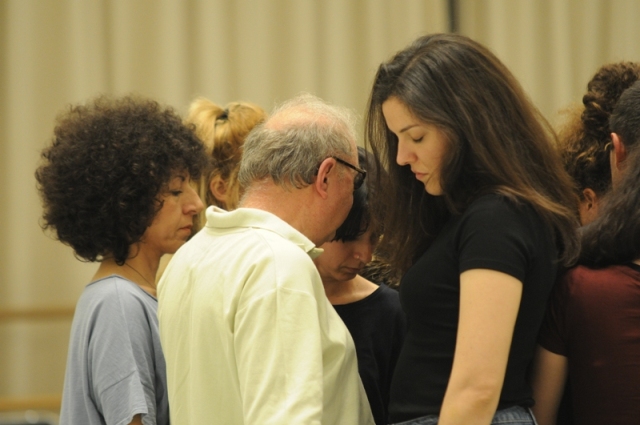
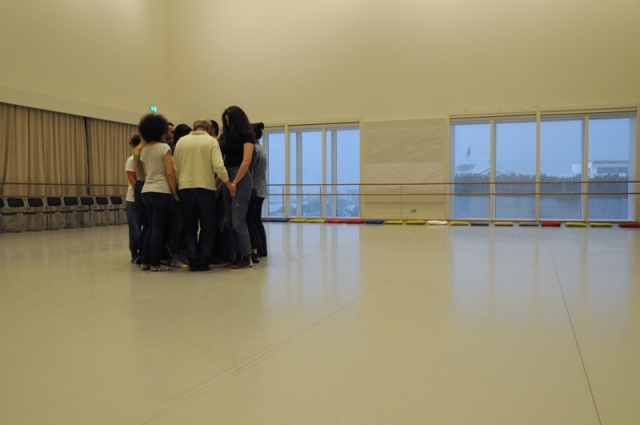
The workshop delves into body percussion and improvisation techniques, examining the body in real-time and space. It underscores the importance of exchanging tools among sound, movement, and instant composition processes, viewing performance as a collective endeavor centered on the question: "How do performers/humans co-exist?"

04
VISUALIZING SOUND
Participants explore methods to enrich and fortify their performing, musical, and kinesiological vocabulary, igniting creativity and imagination, fostering trust in their choices, enhancing focus, unlocking their artistic potential, and fostering collaboration. By consciously playing with fundamental interpretive tools, sound and movement, we cultivate the ability to craft soundscapes through the body in motion, translating auditory stimuli into movement and vice versa, refining musicality, and exploring avenues of communication.

05
The workshop's objective is to cultivate heightened body awareness through sharing, learning, and performing. Participants develop a sensitivity to stimuli, primed for connection, within a structured yet expressive framework. This environment encourages both comprehension and practice of improvised decision-making, akin to a game where rules coalesce with freedom of expression.

06
VISUALIZING SOUND has been presented at:
• Çıplak Ayaklar Studio, Istanbul, Turkey, 5th International Body Music Festival (2012)
• Body Music Week in the Balkan Area, Kastoria, Greece (2013)
• University of California, Berkeley, USA, 6th International Body Music Festival (2013)
• Spinnerei, Leipzig, Germany, Ausstellung Stray (2014)
• PLAYGROUND for the arts, Athens, on multiple occasions, including the IBMF MiniFest (2017)
01 / 06
Grounded in the understanding that sound is produced through vibration and motion, the practice develops a performative vocabulary in which movement generates perceivable sonic structures, enabling cross-sensory communication accessible to participants with diverse sensory abilities without dependence on translation systems.
01
Grounded in the understanding that sound is produced through vibration and motion, the practice develops a performative vocabulary in which movement generates perceivable sonic structures, enabling cross-sensory communication accessible to participants with diverse sensory abilities without dependence on translation systems.
02
Time is approached not as an abstract measurement but as a spatial unfolding of actions, drawing parallels with visual-kinetic languages such as sign language. Through organised bodily rhythm, music acquires visual and tactile dimensions, allowing deaf, hard-of-hearing, blind, and sighted participants to co-create shared aesthetic experiences within an inclusive sensory framework.
03
The workshop delves into body percussion and improvisation techniques, examining the body in real-time and space. It underscores the importance of exchanging tools among sound, movement, and instant composition processes, viewing performance as a collective endeavor centered on the question: "How do performers/humans co-exist?"
04
VISUALIZING SOUND
Participants explore methods to enrich and fortify their performing, musical, and kinesiological vocabulary, igniting creativity and imagination, fostering trust in their choices, enhancing focus, unlocking their artistic potential, and fostering collaboration. By consciously playing with fundamental interpretive tools, sound and movement, we cultivate the ability to craft soundscapes through the body in motion, translating auditory stimuli into movement and vice versa, refining musicality, and exploring avenues of communication.
05
The workshop's objective is to cultivate heightened body awareness through sharing, learning, and performing. Participants develop a sensitivity to stimuli, primed for connection, within a structured yet expressive framework. This environment encourages both comprehension and practice of improvised decision-making, akin to a game where rules coalesce with freedom of expression.
06
VISUALIZING SOUND has been presented at:
• Çıplak Ayaklar Studio, Istanbul, Turkey, 5th International Body Music Festival (2012)
• Body Music Week in the Balkan Area, Kastoria, Greece (2013)
• University of California, Berkeley, USA, 6th International Body Music Festival (2013)
• Spinnerei, Leipzig, Germany, Ausstellung Stray (2014)
• PLAYGROUND for the arts, Athens, on multiple occasions, including the IBMF MiniFest (2017)
photos © Giannis Tourlidis
In 2018, VISUALIZING SOUND was organized by the Educational Department of the Greek National Opera for a mixed group of participants with and without visual or hearing disabilities. This marked the beginning of our ongoing inclusive multisensory artistic journey.
bottom of page